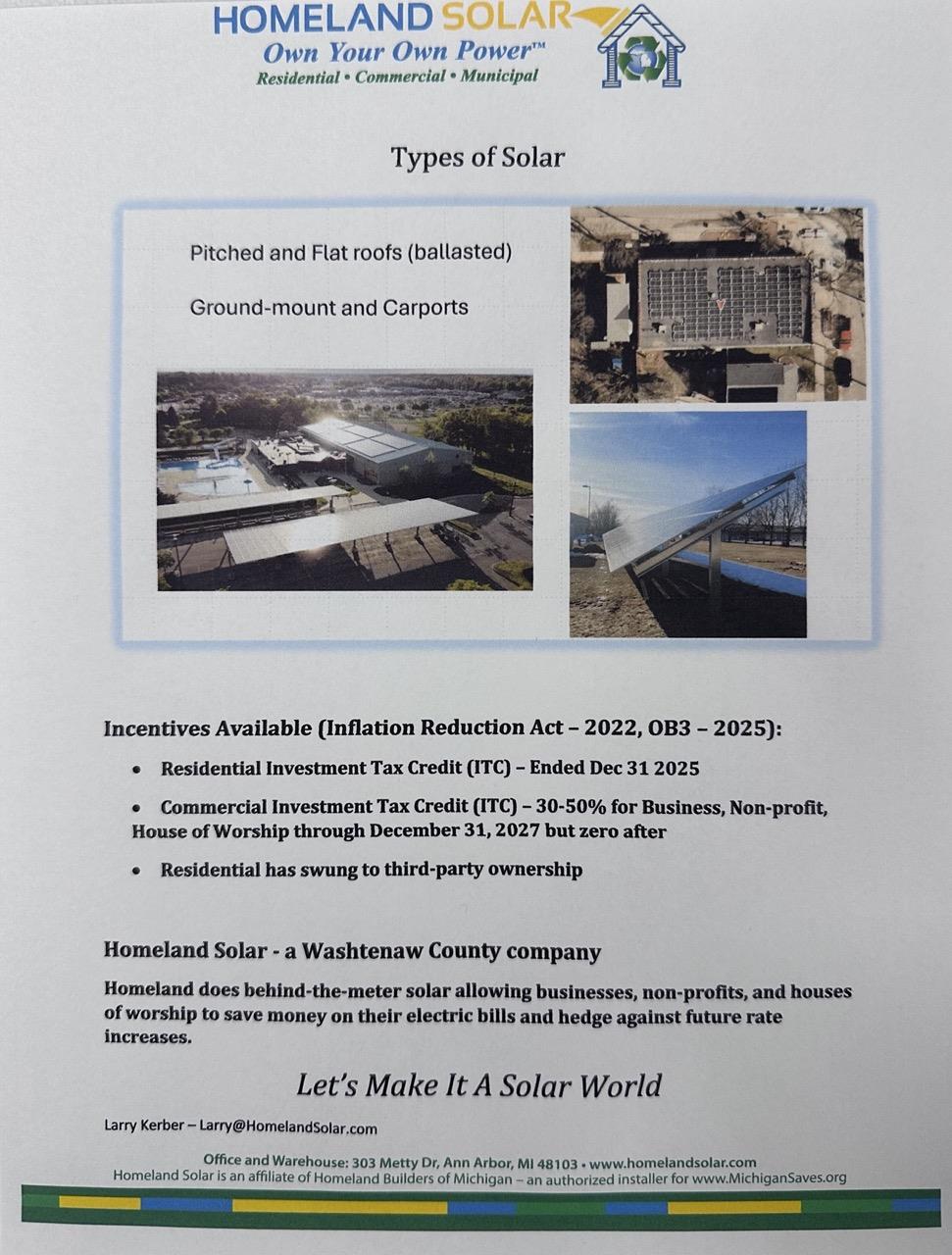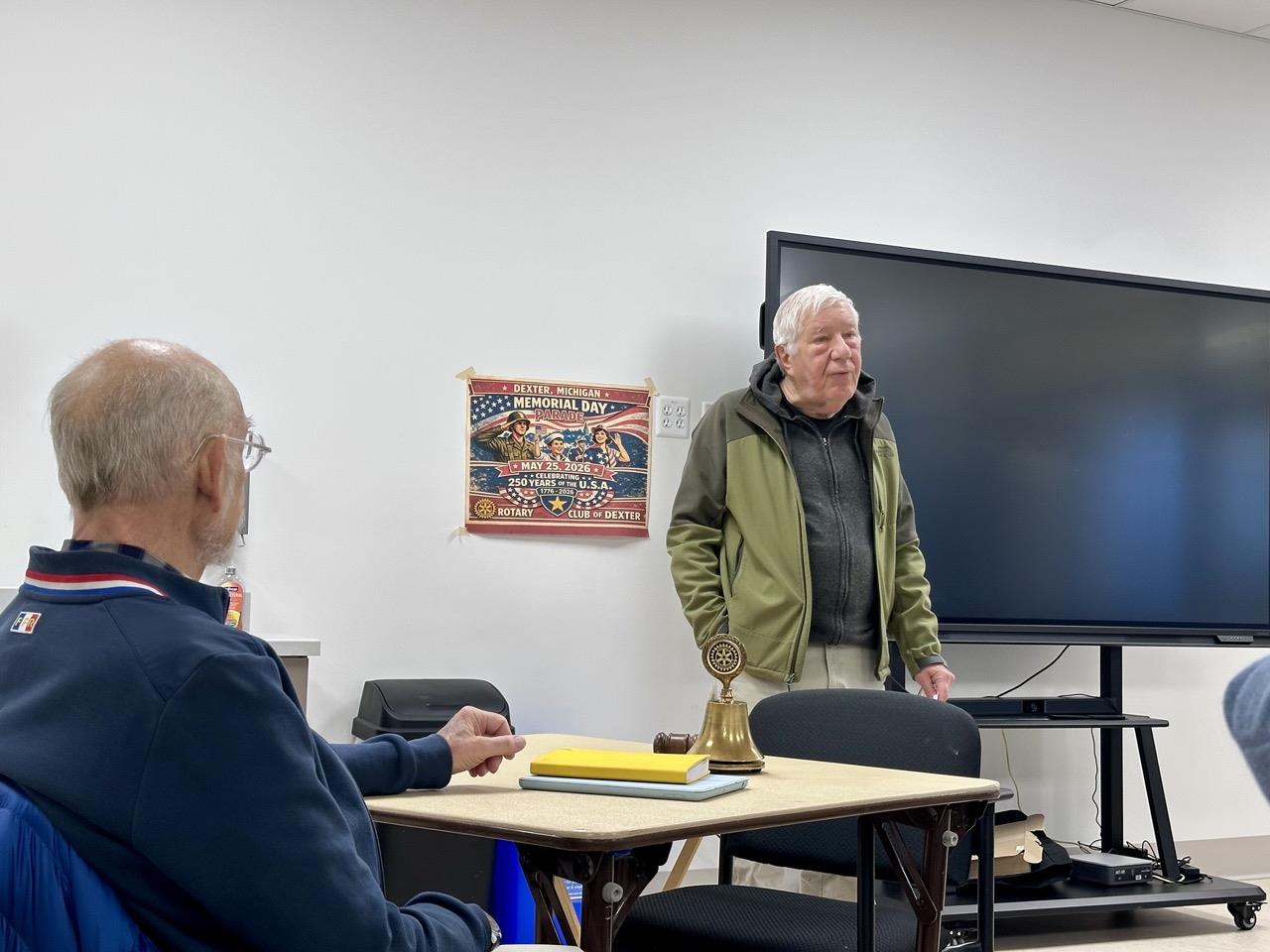

The Rotary Club of Dexter welcomed Larry Kerber of Homeland Solar on February 5 to discuss their business and the state of local solar power installations.
Many commercial buildings with flat roofs have solar panel installations that you can’t see, including a popular Ann Arbor ice cream and donut shop. Member Karl Fink quipped the sun keeps their ice cream cold!
Larry offered some figures on the lower cost of solar energy compared to purchasing electricity from the utility company, which varies by the specific installation. He acknowledged there is a sizable up-front cost for solar power, although the rates per kWh produced never change over the 25-30 year lifespan of a typical installation. Sloped residential roofs typically have the lowest installation costs, followed by flat roofs, ground installations, and then carports - which have a higher cost due to the amount of structural steel required. Larry offered an example of how the Veterans Ice Rink in Ann Arbor has rooftop and carport solar installations that provide about 60% of their energy demands.
It's hard to talk about alternative energy without discussing politics, so Larry thoughtfully addressed the dramatic impact of legislation and tax credits on the industry. Many solar panel suppliers established manufacturing in the United States when federal legislation provided tax incentives for residential and commercial installation. Now that recent federal legislation abruptly ended the residential credits in 2025 and commercial credits in 2027 there has been a significant reduction in demand, and a shift in the marketplace to non-owned systems for residential customers - which create a new set of challenges for homeowners who don't actually own the systems on their roofs and pay a commercial entity for the energy produced. https://www.a2gov.org/parks-and-recreation/parks-and-places/veterans-memorial-park-pool-and-ice-arena/